Stock Performance of Companies that Buy Super Bowl Commercials Relative to the DJIA and S&P 500

Charlie Hart

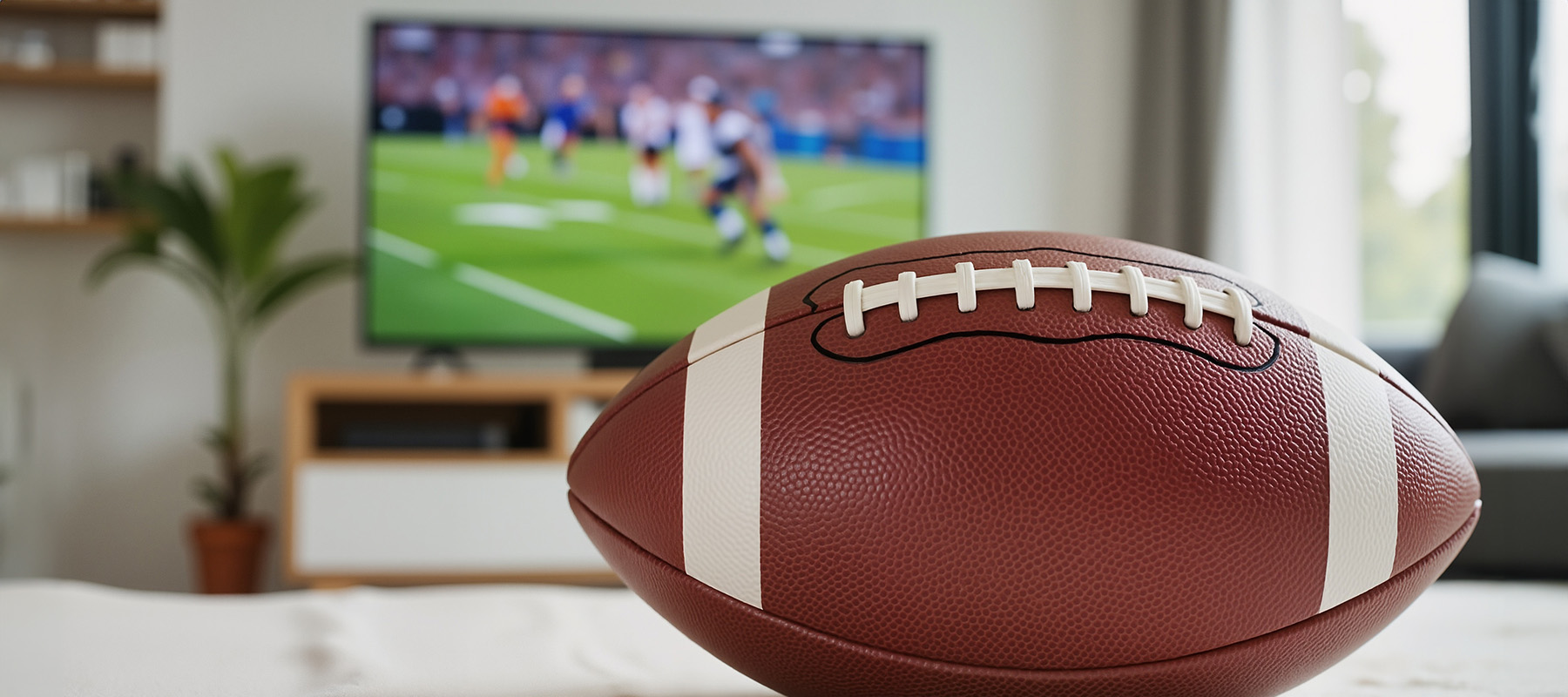
When I think about Super Bowl commercials, Budweiser’s Clydesdales kicking an extra point, Apple’s 1984 MacIntosh revolution, and a young, beachgoing child sucking himself into a Pepsi bottle quickly come to mind. Most of the articles and posts I’ve read through the years center around creativity and popularity of these and countless other commercials. Each year during the week of the big game, stories abound about the multimillion-dollar cost of running an ad during the Super Bowl. In 2025, news stories informed us that a 30-second ad in this year’s game alone would run about $8 million. In the days following the game, stories, charts, and tables appear showing which ads resonated with the viewing public.
I’ve always been curious whether running an ad in the Super Bowl truly pays off for the company that runs it. I’m sure big company CMOs and CFOs have spreadsheets and metrics that help them declare victory on their aggressive spend. The allure of running an ad in the big game I’m sure brings much qualitative goodwill as it presents the company as a “big-time player.” I’ve also heard that some companies will advertise during the Super Bowl in exchange for deals and prominent placement on the same network(s) during other events and times during the year.
I sought to quantitatively measure the success of whether airing a Super Bowl ad pays dividends for the company that runs it (or at least its investors). To do so, I decided to evaluate how the advertising company’s stock price did that year compared to the entire Dow Jones Industrial Average (DJIA or Dow) and Standard and Poor’s 500 (S&P 500 or S&P) during the same year the ad ran. I realize this isn’t a definitive way to measure return on investment (ROI), but it’s a proxy that can be evaluated with a relatively small amount of research and data.
After some quick analysis, I first decided to only look at the last ten years of ads (2015-2024) run in the United States. Then, I used the list of Super Bowl commercials from Wikipedia and www.superbowl-ads.com from those years, so it’s entirely possible that I missed a few as I didn’t go back and watch every commercial from every game. Also, I didn’t completely differentiate whether a company ran an ad in-game versus the pregame or postgame festivities. Next, I debated whether to count network (ABC, CBS, NBC, Fox) promotional ads for shows. Finally, I ended up counting them as that time was used in lieu of a sale to another entity.
When looking at the companies that advertised, I first identified whether they were a parent company, subsidiary, division, brand, etc. of a company publicly traded on one of the two major United States trading exchanges, the New York Stock Exchange (NYSE) or the National Association of Securities Dealers Automated Quotations (NASDAQ). If the advertiser was part of a publicly traded company, I identified the closest publicly traded component. For instance, Doritos is a brand of Frito-Lay, which is a division of PepsiCo. PepsiCo is publicly traded on the NYSE under the symbol PEP. Therefore, I used PepsiCo as a proxy for Doritos, an advertiser in the big game. I did not include in my analysis companies privately held, traded over the counter (OTC), and only traded elsewhere in the world.
I only counted a company’s stock performance once per year regardless of how many times they advertised during the game. PepsiCo may have run eight ads, but I only observed whether PepsiCo beat the DJIA and S&P for the year one time for that annum. If two or more companies participated in the same ad, I evaluated each company separately. For example, General Motors and Netflix jointly participated in an ad in 2023. I looked at the annual share price performance of both General Motors and Netflix and counted them as two separate investments.
When looking at overall returns for the year, I attempted to include dividends as a part of the return. For example, if PepsiCo went up 5% for the year and paid a 3% dividend, the total return for the year was 8%. It is possible that I could have missed a dividend or two, especially for companies that are no longer publicly traded or have been bought or merged with other companies. Most historical data is readily available, but in a handful of cases, I had to look at old press releases and interpolate the best I could.
Determining how to evaluate companies that advertised in the Super Bowl and then changed status during the same year proved a challenge. I didn’t tally those that went public since I couldn’t buy them at the beginning of the year. Also, I didn’t count those that went private either, since I couldn’t evaluate a full-year return.
For those that advertised in the big game and got acquired, I followed the money. If I bought a share of ABC on January 1, and they got acquired by DEF on June 30, I looked at the return of ABC until the point of acquisition. I then took the shares granted by DEF on June 30 and followed its return until December 31 and combined the performance of both stocks for the full-year return. For the DJIA and S&P 500 full-year performance (with dividends), I used Don’t Quit Your Day Job (www.dqydj.com) as my source.
More times than not, companies that advertised in the Super Bowl did not outperform the DJIA and S&P in the same calendar year. In the last ten years, only 128 out of 294 (43.5%) publicly traded advertisers outperformed the Dow, and 115 out of 294 (39.1%) outpaced the S&P 500. To analyze the data further, From the years 2015 to 2024, advertisers outperformed the DJIA in three of the ten years, equaled it twice, and underperformed five times. Performance against the S&P 500 proved even more difficult as the advertisers outperformed the index in two of the years, matched it once, and underperformed it seven years. Table 1 summarizes this data.
| Year | Ad Companies | Beat Dow | Beat S&P | Beat Dow (%) | Beat S&P (%) |
|---|---|---|---|---|---|
| 2015 | 26 | 15 | 15 | 57.7 | 57.7 |
| 2016 | 25 | 7 | 7 | 28.0 | 28.0 |
| 2017 | 25 | 10 | 13 | 40.0 | 52.0 |
| 2018 | 26 | 13 | 13 | 50.0 | 50.0 |
| 2019 | 30 | 15 | 9 | 50.0 | 30.0 |
| 2020 | 25 | 16 | 10 | 64.0 | 40.0 |
| 2021 | 27 | 6 | 4 | 22.2 | 14.8 |
| 2022 | 40 | 14 | 17 | 35.0 | 42.5 |
| 2023 | 37 | 20 | 17 | 54.1 | 45.9 |
| 2024 | 33 | 12 | 10 | 36.4 | 30.3 |
| Total | 294 | 128 | 115 | 43.5 | 39.1 |
Another interesting dataset to examine is the performance of individual companies that advertised in the Super Bowl compared with the DJIA and S&P 500 in that same year. Table 2 lays out the number of years that a specific company purchased an ad in the season-ending contest (as a publicly traded company), the times it outperformed the DJIA and/or the S&P, and the respective percentage of times that it beat each index. As a side note, four different times in Table 2, two different companies appear in the same cell box. These dual-entry companies either acquired or got acquired by the other company during the year of a Super Bowl ad. The result for the year tracks the performance of the acquired company until acquisition, and that of the acquiring company through the end of the year.
While none of the results would affect my investing decisions, some conversation-starting results arise. Of the companies that advertised more than one year, only three beat the DJIA and S&P 500 every time. Those companies included website builder Wix (NASDAQ: WIX) with five years of beating both indices, restauranteur Yum! Brands (NYSE: YUM) with two perfect years, and cybersecurity provider CrowdStrike (NASDAQ: CRWD) also with two blemish-free years.
Conversely, seven companies that bought ads for more than one year did not have a single victory against the DJIA or S&P 500 in those years. Two of those companies included the old broadcaster Viacom (NYSE: VIA), which ceased to exist in 2019 and suffered defeats to the two indices in four different years and Viacom descendent Paramount Global (NASDAQ: PARAA), three times the lesser of the DJIA and S&P 500. The other five companies suffered defeats in two years each and included alcoholic beverage company Diageo (NYSE: DEO), confectionary maker The Hershey Company (NYSE: HSY), pharmaceutical giant Pfizer (NYSE: PFE), financial services provider The Rocket Companies (NYSE: RKT), and online retailer Vroom (NYSE: VRM).
Five different companies advertised during the NFL’s final game of the season in all ten years of my study. They had varying results in their stock performance during those years. Financial software provider Intuit (NASDAQ: INTU) appears to be the Lombardi Trophy winner by defeating both the DJIA and S&P 500 eight times during the ten-year period. Communication service provider T-Mobile (NASDAQ: TMUS) wins the metaphorical conference championship game by defeating both indices six times. Entertainment conglomerate Disney (NYSE: DIS) captures the divisional crown by beating the DJIA five times and the S&P 500 four. Telecom provider Comcast (NASDAQ: CMCSA) claims the Wild Card with four wins each against the Dow and S&P. Alcoholic beverage king AB InBev fails to make the playoffs by beating the DJIA just three times and the S&P 500 twice.
| Symbol | Company | Total Ad Years (2015-2024) | Win vs DJIA | Win vs S&P 500 | Win% vs DJIA | Win% vs S&P 500 |
|---|---|---|---|---|---|---|
| AAPL | Apple | 1 | 1 | 1 | 100% | 100% |
| ABEV | Ambev | 1 | 0 | 0 | 0% | 0% |
| ADT | ADT | 1 | 1 | 1 | 100% | 100% |
| AFL | Aflac | 1 | 1 | 1 | 100% | 100% |
| ALK | Alaska Air Group | 1 | 0 | 0 | 0% | 0% |
| ALL | Allstate | 1 | 0 | 0 | 0% | 0% |
| AMZN | Amazon | 8 | 4 | 4 | 50% | 50% |
| AZN | AstraZenica | 1 | 0 | 0 | 0% | 0% |
| BBWI | Limited Brands | 1 | 1 | 1 | 100% | 100% |
| BKNG | Booking Holdings | 3 | 2 | 3 | 67% | 100% |
| BUD | AB InBev | 10 | 3 | 2 | 30% | 20% |
| BWLD | Buffalo Wild Wings & Weck | 1 | 0 | 0 | 0% | 0% |
| CBS (Old) | CBS Corporation | 2 | 1 | 1 | 50% | 50% |
| CCL | Carnival Corporation | 1 | 1 | 1 | 100% | 100% |
| CL | Colgate-Palmoliva Company | 3 | 1 | 1 | 33% | 33% |
| CMCSA | Comcast | 10 | 4 | 4 | 40% | 40% |
| CMG | Chipotle Mexican Grill | 1 | 1 | 0 | 100% | 0% |
| COIN | Coinbase Global | 1 | 0 | 0 | 0% | 0% |
| CRM | Salesforce | 1 | 0 | 0 | 0% | 0% |
| CRWD | CrowdStrike Holdings | 2 | 2 | 2 | 100% | 100% |
| CSGP | CoStar Group | 1 | 0 | 0 | 0% | 0% |
| CVNA | Carvana | 1 | 0 | 0 | 0% | 0% |
| CZR | Caesars Entertainment | 1 | 0 | 0 | 0% | 0% |
| DASH | Doordash | 3 | 2 | 2 | 67% | 67% |
| DEO | Diageo | 2 | 0 | 0 | 0% | 0% |
| DFS | Discover Financial Services | 2 | 1 | 0 | 50% | 0% |
| DIS | Disney | 10 | 5 | 4 | 50% | 40% |
| DKNG | DraftKings | 2 | 1 | 1 | 50% | 50% |
| DPS | Dr Pepper Snapple Group | 1 | 0 | 0 | 0% | 0% |
| DXCM | Dexcom | 2 | 1 | 1 | 50% | 50% |
| ELF | e.l.f. Beauty | 2 | 1 | 1 | 50% | 50% |
| EPC | Edgewell Personal Care Company | 1 | 0 | 0 | 0% | 0% |
| ETFC | E-Trade | 1 | 0 | 0 | 0% | 0% |
| ETSY | Etsy | 1 | 0 | 0 | 0% | 0% |
| EXPE | Expedia Group | 1 | 0 | 0 | 0% | 0% |
| FCAU | Fiat Chrysler Automobiles | 6 | 3 | 3 | 50% | 50% |
| FIT | Fitbit | 1 | 0 | 0 | 0% | 0% |
| FOX | Fox Entertainment Group | 2 | 0 | 1 | 0% | 50% |
| FOXA | Fox Corporation | 3 | 1 | 1 | 33% | 33% |
| FOX/DIS | Fox Entertainment Group / Disney | 1 | 0 | 0 | 0% | 0% |
| FVRR | Fiverr | 1 | 0 | 0 | 0% | 0% |
| GDDY | GoDaddy | 1 | 1 | 1 | 100% | 100% |
| GM | General Motors | 7 | 3 | 3 | 43% | 43% |
| GNC | GNC Holdings | 1 | 0 | 0 | 0% | 0% |
| GOOGL | Google/Alphabet | 6 | 5 | 4 | 83% | 67% |
| GRPN | Groupon | 1 | 0 | 0 | 0% | 0% |
| GRUB | Grubhub | 1 | 0 | 0 | 0% | 0% |
| HLTH | Cue Health | 1 | 0 | 0 | 0% | 0% |
| HMC | Honda Motor Company | 1 | 0 | 0 | 0% | 0% |
| HOLX | Hologic | 1 | 1 | 1 | 100% | 100% |
| HRB | H&R Block | 1 | 0 | 0 | 0% | 0% |
| HRL | Hormel | 2 | 1 | 1 | 50% | 50% |
| HSY | The Hershey Company | 2 | 0 | 0 | 0% | 0% |
| INTC | Intel | 1 | 1 | 1 | 100% | 100% |
| INTU | Intuit Corporation | 10 | 8 | 8 | 80% | 80% |
| JACK | Jack in the Box | 1 | 0 | 0 | 0% | 0% |
| JAH/NWL | Jarden/Newell Rubbermaid | 1 | 0 | 0 | 0% | 0% |
| K | Kellogg’s/Kellanova | 7 | 3 | 2 | 43% | 29% |
| KHC | KraftHeinz | 4 | 2 | 1 | 50% | 25% |
| KMB | Kimberly Clark | 1 | 0 | 0 | 0% | 0% |
| KO | Coca-Cola | 5 | 2 | 2 | 40% | 40% |
| LGF.A | Lionsgate Entertainment | 1 | 0 | 0 | 0% | 0% |
| LOGI | Logitech International | 1 | 0 | 0 | 0% | 0% |
| MCD | McDonalds | 3 | 2 | 2 | 67% | 67% |
| MDLZ | Mondelez International | 1 | 0 | 0 | 0% | 0% |
| META | Facebook/Meta | 2 | 1 | 1 | 50% | 50% |
| MGM | MGM Resorts International | 1 | 0 | 0 | 0% | 0% |
| MS | Morgan Stanley | 4 | 2 | 3 | 50% | 75% |
| MSFT | Microsoft | 4 | 3 | 3 | 75% | 75% |
| NCLH | Norwegian Cruise Line Holdings | 1 | 1 | 1 | 100% | 100% |
| NFLX | Netflix | 5 | 3 | 3 | 60% | 60% |
| PARAA | Paramount Global | 3 | 0 | 0 | 0% | 0% |
| PDD | PDD Holdings | 2 | 1 | 1 | 50% | 50% |
| PEP | PepsiCo | 9 | 4 | 2 | 44% | 22% |
| PFE | Pfizer | 2 | 0 | 0 | 0% | 0% |
| PG | Procter & Gamble | 2 | 0 | 0 | 0% | 0% |
| PLNT | Planet Fitness | 1 | 0 | 1 | 0% | 100% |
| QSR | Restaurant Brands International | 2 | 1 | 0 | 50% | 0% |
| RKT | Rocket Companies | 2 | 0 | 0 | 0% | 0% |
| S | Sprint | 4 | 1 | 1 | 25% | 25% |
| SAM | Boston Beer Company | 1 | 0 | 0 | 0% | 0% |
| SKX | Skechers USA | 7 | 4 | 4 | 57% | 57% |
| SMG | Scott’s Miracle Gro | 1 | 0 | 0 | 0% | 0% |
| SNAP | Snap | 1 | 0 | 0 | 0% | 0% |
| SONY | Sony Group Corp | 1 | 1 | 0 | 100% | 0% |
| SQSP | Squarespace | 3 | 2 | 2 | 67% | 67% |
| STLA | Stellantis | 1 | 1 | 1 | 100% | 100% |
| T | AT&T | 2 | 1 | 1 | 50% | 50% |
| TAP | MolsonCoors | 2 | 1 | 0 | 50% | 0% |
| TM | Toyota Motor Corp | 9 | 2 | 0 | 22% | 0% |
| TMUS | T-Mobile | 10 | 6 | 6 | 60% | 60% |
| T/WBD | AT&T/Warner Brothers Discovery | 1 | 0 | 0 | 0% | 0% |
| TWX/T | Time Warner/AT&T | 1 | 0 | 0 | 0% | 0% |
| UBER | Uber | 4 | 1 | 1 | 25% | 25% |
| UL | Unilever | 9 | 5 | 4 | 56% | 44% |
| V | Visa | 1 | 1 | 1 | 100% | 100% |
| VIA (Old) | Viacom | 4 | 0 | 0 | 0% | 0% |
| VIAC | ViacomCBS | 4 | 1 | 1 | 25% | 25% |
| VRM | Vroom | 2 | 0 | 0 | 0% | 0% |
| VRX | Valeant Pharmaceuticals | 1 | 0 | 0 | 0% | 0% |
| VZ | Verizon | 5 | 1 | 1 | 20% | 20% |
| WBD | Warner Brothers Discovery | 1 | 1 | 0 | 100% | 0% |
| WBX | Wallbox | 1 | 0 | 0 | 0% | 0% |
| WDAY | Workday | 1 | 1 | 1 | 100% | 100% |
| WEN | The Wendy’s Company | 2 | 1 | 2 | 50% | 100% |
| WIX | Wix | 5 | 5 | 5 | 100% | 100% |
| WMT | WalMart | 3 | 3 | 2 | 100% | 67% |
| WW | Weight Watchers International | 1 | 0 | 0 | 0% | 0% |
| YELP | Yelp | 1 | 0 | 0 | 0% | 0% |
| YUM | Yum! Brands | 2 | 2 | 2 | 100% | 100% |
| Total | 294 | 128 | 115 | 43.5% | 39.1% |
I readily admit that this data does not suggest whether companies are getting a decent return on their Super Bowl investment since stock prices are not true proxies for ROI, but investors could look at this information and deduce that buying DJIA and S&P index funds usually provide higher returns than buying the individual stocks of the big game’s advertisers.
Is your company getting the best return possible for its advertising and marketing dollars? If not, maybe it’s time to talk to us at Fuel VM. We specialize in ad creative, spending, and placement, not to mention all things digital marketing.

This article was written by Charlie Hart, an expert in business operations and financial strategy with a passion for driving growth in the marketing industry. As Chief Operating Officer at FUEL VM, he draws upon a dynamic 30-year career that includes financial analysis, recruiting, and a decade as an award-winning teacher. Charlie’s strategic guidance is backed by a BS in Industrial Engineering from Purdue University and an MBA from the University of Virginia Darden School of Business. Follow his insights by connecting with him on LinkedIn.